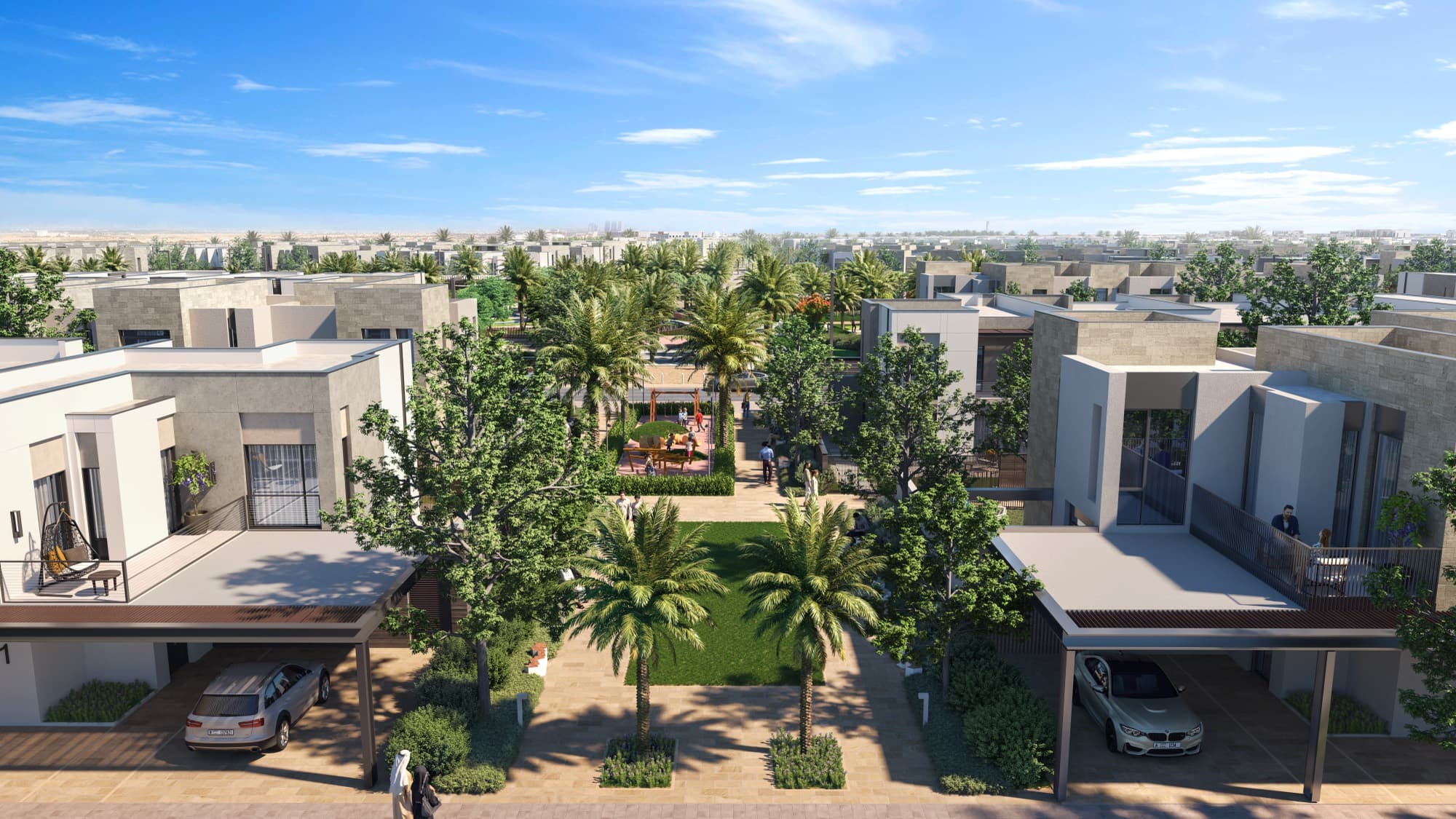
I've bought, sold and handed over off-plan homes in Dubai for the best part of twenty years, and I live in Arabian Ranches 3 myself — so when people ask me whether buying off-plan is a smart move, I answer as a resident first and a broker second. Done properly, off-plan is one of the most accessible ways into a quality Emaar community: you spread the cost over the build, you often get the newest layouts and finishes, and you lock in today's price on tomorrow's home. Done carelessly, it's where people overstretch, misread a payment plan, or skip the snagging and regret it.
This guide is the conversation I have over coffee with buyers who are weighing an off-plan unit in AR3 against a ready resale. I'll walk you through how Dubai payment plans actually work, the escrow and RERA protections that sit behind your money, what Oqood registration means, how handover and snagging unfold, the genuine risks and how to manage them, and how reselling before completion works through an NOC and assignment. I'll also be honest about where off-plan loses to ready, because sometimes it does.
One thing that's specific to AR3 and worth saying early: the community is built in paired phases that share floor plans — think June and June 2, Bliss and Bliss 2, Anya and Anya 2, Caya and Caya 2, Elie Saab Villas and Villas II. That pairing is quietly one of the best risk-reducers you'll find anywhere in Dubai, and I'll explain why later on.
Throughout, treat figures as general guidance and verify before you sign. Live pricing for each AR3 cluster sits on the individual cluster pages, drawn from Dubai Land Department and Property Monitor data — this page is about how the process works, not what any given unit costs today.
What "off-plan" actually means in Dubai
Off-plan simply means you're buying a home before it's finished — sometimes before a single block is poured, sometimes when the structure is up and you're choosing between near-identical units. You buy directly from the developer (Emaar, in AR3's case) rather than from an existing owner, and you pay in instalments tied to the build rather than in one lump sum. In exchange for that patience and a little uncertainty, you typically get the launch price, the newest specifications, and a longer runway to organise your finances.
In Arabian Ranches 3 you'll see the full spread of off-plan product. The townhouse clusters — Joy, Sun, Spring, Ruba, Bliss and Bliss 2, May, Raya, Anya and Anya 2 — run to 3 and 4 bedrooms. The villa clusters step up: Caya and Caya 2 are 3, 4 and 5-bed standalone villas; June and June 2 are 4 and 5-bed villas; and the Elie Saab Villas and Villas II are 4 and 5-bed branded luxury homes. Several phases — Joy, Sun, Spring, Ruba, Bliss, Caya and Anya — are already completed and handed over, while others are completing across 2025 and 2026.
That mix matters, because in AR3 you're rarely buying blind. When a paired phase has already handed over, you can walk a finished version of the layout you're considering, see the build quality with your own eyes, and judge the community as a living place rather than a render. That's a luxury most off-plan buyers elsewhere in Dubai don't get.
How payment plans work: 60/40, 80/20 and friends
A Dubai payment plan is just a schedule that splits your purchase price into instalments. The shorthand — 60/40, 80/20, and so on — tells you the split between what you pay during construction and what you pay at handover. A 60/40 plan means 60% across the build period and 40% on completion; an 80/20 means 80% during construction and 20% at handover. Emaar plans usually open with a booking deposit (commonly around 10%) followed by staged payments linked to construction milestones or fixed dates.
Two phrases worth knowing. A construction-linked plan releases your instalments as the developer hits build stages — foundations, structure, and so on — which keeps your money roughly in step with progress. A post-handover plan lets you keep paying a slice of the price for a year or two after you've moved in, which eases cash flow but usually means a larger total commitment. Neither is inherently better; the right one depends on whether your priority is the lowest entry cost or the gentlest monthly outlay.
- Booking deposit: typically around 10% to reserve the unit and sign the Sales & Purchase Agreement (SPA).
- During construction: staged instalments, milestone- or date-linked, making up the bulk on most AR3 plans.
- On handover: the final tranche, paid when the unit is ready and you take possession.
- Post-handover (where offered): a portion spread over 1–2 years after you've moved in.
- Mortgage timing: many buyers pay early instalments in cash and arrange a mortgage near handover — banks lend on a near-complete asset more readily than a hole in the ground.
Where your money sits: escrow, RERA and the regulator
This is the part that lets me sleep at night recommending off-plan in Dubai, and it's genuinely well-built. Under Dubai law, every off-plan instalment you pay goes into a RERA-regulated escrow account tied to that specific project — not into the developer's general bank account. The developer can only draw money out as construction milestones are independently certified. If the project stalls, your funds aren't simply gone; they're ring-fenced under regulatory oversight.
RERA (the Real Estate Regulatory Agency, the regulatory arm of the Dubai Land Department) sits over the whole system. Developers must register projects, appoint an escrow account trustee, and report progress. For a buyer it means the people building your home can't spend tomorrow's instalment on something else today. With a developer of Emaar's scale and track record, the risk profile is about as benign as off-plan gets — but the escrow framework protects you regardless of who you buy from.
Always confirm three things before you transfer a dirham: that the project is registered with the DLD, that payments are routed to the project's named escrow account (never to a personal account or a broker's account), and that your SPA names that escrow account. If anyone asks you to pay outside escrow, walk away — that's the clearest red flag in the market.
Oqood: registering your off-plan purchase
When you buy ready property in Dubai, ownership is recorded with a Title Deed. Off-plan works a little differently at first: because the home doesn't physically exist yet, your purchase is recorded through Oqood, the DLD's interim registration system for off-plan sales. Oqood (the word means "contracts" in Arabic) logs your SPA with the Land Department and gives your purchase legal standing while the building goes up.
Practically, the developer handles the Oqood registration and you pay the DLD's registration fee — the standard 4% transfer fee applies to off-plan as it does to ready, alongside a modest Oqood admin charge. Keep your Oqood certificate safe: it's your proof of ownership during construction and the document you'll rely on if you ever sell before completion. When the project is finished and you've settled the final payment, your Oqood registration converts into a full Title Deed in your name at handover.
It's a small step, but it's the legal backbone of your off-plan purchase. A registered Oqood means the DLD recognises you as the buyer of that specific unit — not just someone with a receipt.
Handover and snagging: taking the keys properly
When your AR3 home is ready, the developer issues a handover notice and invites you to inspect and complete. Before you sign anything or pay the final tranche, this is your window to snag the property — to walk through methodically and list every defect, however small, so the developer fixes them before you accept the keys. Skipping this is the single most common mistake I see off-plan buyers make.
Snagging means checking the things a render never shows: doors and drawers that don't sit right, paint and grout finish, tile lippage, taps and drainage, the air-conditioning on every setting, sockets and switches, the state of the garden and boundary walls, and that the layout and fittings match your SPA. Plenty of buyers bring in a professional snagging company for a few hundred dirhams — money very well spent on a brand-new home, because it puts a documented, technical defect list in the developer's hands.
You submit the snag list, the developer rectifies the items, and you re-inspect before final acceptance. Once you're satisfied and the final payment clears, you take possession, the Oqood converts to your Title Deed, and the property is yours. A good handover is unhurried — don't let anyone rush you past the inspection to hit a completion date.
The AR3 paired-phase advantage
Here's where AR3's structure quietly works in your favour. The community's phases are built in pairs that share floor plans — Bliss and Bliss 2, June and June 2, Anya and Anya 2, Caya and Caya 2, Elie Saab Villas and Villas II. Where the first phase has already completed and handed over, you can physically walk a finished home in exactly the layout you're buying off-plan in the paired phase.
That de-risks an off-plan decision in a way renders simply can't. You see the real ceiling heights, the actual light through the windows, the genuine build quality and finish, and how the community feels once people are living in it. When I'm advising a buyer on an off-plan phase, the first thing I do is find the completed twin and take them through it. It turns an act of faith into an informed choice.
The real risks — and how to manage them
I won't pretend off-plan is risk-free; nothing in property is. But the risks are knowable, and most are manageable with a bit of discipline. The headline ones are construction delay, market movement between purchase and handover, the gap between render and reality, and over-committing your own cash flow across a multi-year payment plan.
Delay is the classic. Build timelines can slip for all sorts of reasons, so build a buffer into your own plans rather than assuming a date is gospel — and check the contractual completion date and any grace period in your SPA. Market movement cuts both ways: prices can rise during construction (the upside that draws investors) or soften, so buy a home you're happy to own and live in, not purely a punt on capital growth. The render-versus-reality gap is exactly what snagging and the paired-phase walk-through are there to close.
The risk most within your control is your own finances. Map every instalment against your real income, leave headroom for the DLD 4% fee and incidentals, and don't assume you'll definitely flip before handover to fund the final payment. If you'll need a mortgage, speak to a bank early about indicative terms — as a guide, expats can often borrow up to around 80% loan-to-value under AED 5M and roughly 75% above that or on some off-plan, but these are general ranges to verify with your lender, not promises.
- Buy from a registered project with an escrow account — non-negotiable.
- Read the SPA's completion date, grace period and penalty clauses before signing.
- Stress-test the payment plan against your income, with the 4% fee budgeted in.
- Don't bank on a pre-handover resale to fund completion — treat that as upside, not the plan.
- Where a paired phase is complete, walk it before you commit.
- Verify any KHDA school ratings, mortgage terms and Golden Visa rules independently — they change.
Reselling before handover: NOCs and assignment
One of off-plan's genuine attractions is that you don't have to wait for completion to sell. Selling an under-construction unit is done through an assignment (often called a resale or transfer of an off-plan unit), where you pass your SPA and obligations to a new buyer. It's a well-trodden process in Dubai, but it runs on the developer's terms, so know the rules before you count on it.
Two things govern it. First, most developers require you to have paid a minimum percentage of the price — frequently in the region of 30–40%, though it varies by developer and plan — before they'll permit a resale. Second, you'll need a No Objection Certificate (NOC) from the developer confirming they consent to the transfer; the developer usually charges an NOC/administration fee for it. The assignment is then registered with the DLD, your Oqood is reissued in the new buyer's name, and they step into your payment plan.
If selling on before completion is part of your thinking — whether you're an investor or simply want flexibility — read the resale clause in your SPA at the outset. Check the payment threshold, the NOC fee, and any developer restrictions on assignment. AR3's paired-phase structure helps here too: a completed twin phase gives prospective resale buyers real reassurance about what they're buying, which tends to make an off-plan unit easier to move.
Off-plan vs. ready: which suits you?
The honest answer is that it depends on what you're optimising for. Off-plan typically offers a lower entry point, a staged payment plan that's kinder to cash flow, the newest layouts and finishes, and the potential for capital growth during the build. The trade-offs are the wait, the construction and market risk, and the fact that you can't earn rent or move in until handover.
Ready property does the opposite. You see exactly what you're buying, you can move in or let it immediately, and there's no completion risk — but you'll usually pay more per square foot, you need the funds (or mortgage) up front, and you're buying someone's lived-in home rather than a pristine new one. For an end-user who needs to move now, ready often wins. For a buyer with time, who wants the latest product or a gentler payment schedule, off-plan frequently makes more sense.
In AR3 specifically, you can have a foot in both camps. Several clusters are already handed over and trading as ready resales, while paired and later phases are still completing off-plan. That means you can compare a finished, liveable version against an off-plan unit in the same community — sometimes the very same floor plan — and choose with real evidence rather than guesswork. If you'd like help weighing a specific off-plan cluster against a ready resale, I'm a resident here and happy to talk it through; just reach out to James.
Frequently Asked Questions
Off-Plan Guide — FAQs
What does a 60/40 or 80/20 payment plan mean in Dubai?+
It's the split between what you pay during construction and what you pay at handover. A 60/40 plan means 60% of the price is paid in instalments across the build and 40% on completion; an 80/20 means 80% during construction and 20% at handover. Most plans open with a booking deposit of around 10%, then staged payments linked to construction milestones or fixed dates. Some Emaar plans also offer a post-handover portion spread over a year or two after you move in.
Is buying off-plan in Dubai safe?+
It's well-regulated. Every instalment you pay goes into a RERA-regulated escrow account tied to that specific project, and the developer can only withdraw funds as independently certified construction milestones are met. RERA, under the Dubai Land Department, oversees the system. The main safeguards are simple: buy from a DLD-registered project, pay only into the named escrow account, and never transfer money to a personal or broker's account. Buying from an established developer with a long delivery record further reduces the risk.
What is Oqood and why does it matter?+
Oqood is the Dubai Land Department's interim registration system for off-plan sales — it records your Sales & Purchase Agreement with the DLD while your home is still being built, since a Title Deed can't be issued for a property that doesn't physically exist yet. The developer handles registration and you pay the fee. Your Oqood certificate is your proof of ownership during construction, and it converts into a full Title Deed in your name once the project completes and you've made your final payment.
Can I sell an off-plan property before it's completed?+
Yes, through an assignment (a resale of the under-construction unit). Two conditions usually apply: you must have paid a minimum percentage of the price — often around 30–40%, though it varies by developer and plan — and you need a No Objection Certificate (NOC) from the developer, for which they charge a fee. The assignment is then registered with the DLD and your Oqood is reissued in the new buyer's name, who takes over your payment plan. Always check the resale clause in your SPA before you rely on this.
What is snagging and do I really need it?+
Snagging is the inspection you carry out at handover to list every defect — paint and grout finish, doors and drawers, taps and drainage, the air-conditioning, sockets, the garden — before you accept the keys and pay the final instalment. You submit the list, the developer rectifies the items, and you re-inspect. Yes, it genuinely matters: it's the most common step buyers skip and later regret. Many people hire a professional snagging company for a few hundred dirhams, which is money very well spent on a brand-new home.
What fees do I pay when buying off-plan in AR3?+
The standard DLD transfer fee of 4% of the purchase price applies to off-plan just as it does to ready property, alongside a modest Oqood registration admin charge. Beyond that, budget for any developer administration fees, your mortgage arrangement costs if you're borrowing, and an NOC fee later if you decide to resell before completion. Treat all figures as general guidance and confirm the exact charges at the time of purchase, as fees and rules can change.
How does AR3's paired-phase structure reduce off-plan risk?+
Arabian Ranches 3 is built in paired phases that share floor plans — Bliss and Bliss 2, June and June 2, Anya and Anya 2, Caya and Caya 2, Elie Saab Villas and Villas II. Where the first phase has completed and handed over, you can physically walk a finished home in exactly the layout you're buying off-plan in its twin. You see the real build quality, light, ceiling heights and community feel rather than relying on a render — which turns an off-plan decision from an act of faith into an informed choice.
Can off-plan property qualify for the UAE Golden Visa?+
Off-plan property can count towards the Golden Visa property route, which is generally tied to a property value of AED 2,000,000 or more. Eligibility can depend on the developer and the registration stage, and the exact requirements — including how off-plan, mortgaged and multiple-property cases are treated — do change, so verify the current rules with the DLD or a specialist before making decisions on that basis. If a long-term residency visa is part of your reason for buying, confirm eligibility before you commit to a specific unit.
Should I buy off-plan or a ready resale in Arabian Ranches 3?+
It depends on your timeline. Off-plan offers a lower entry point, staged payments, the newest finishes and potential growth during the build, but you wait for handover and carry some construction and market risk. Ready property lets you see exactly what you're buying and move in or let immediately, usually at a higher price per square foot. AR3's advantage is that several clusters are already handed over and trading as resales while others complete off-plan — so you can compare a liveable home against an off-plan unit in the same community, sometimes the same floor plan.