I've spent twenty years selling property in Dubai, and a good few of those advising families who were doing exactly what you may be weighing up now — packing up a life in the UK or Europe and moving the whole household to the desert. I made that move myself, and these days I live in Arabian Ranches 3 with my own family, so this guide is written from the inside rather than from a brochure.
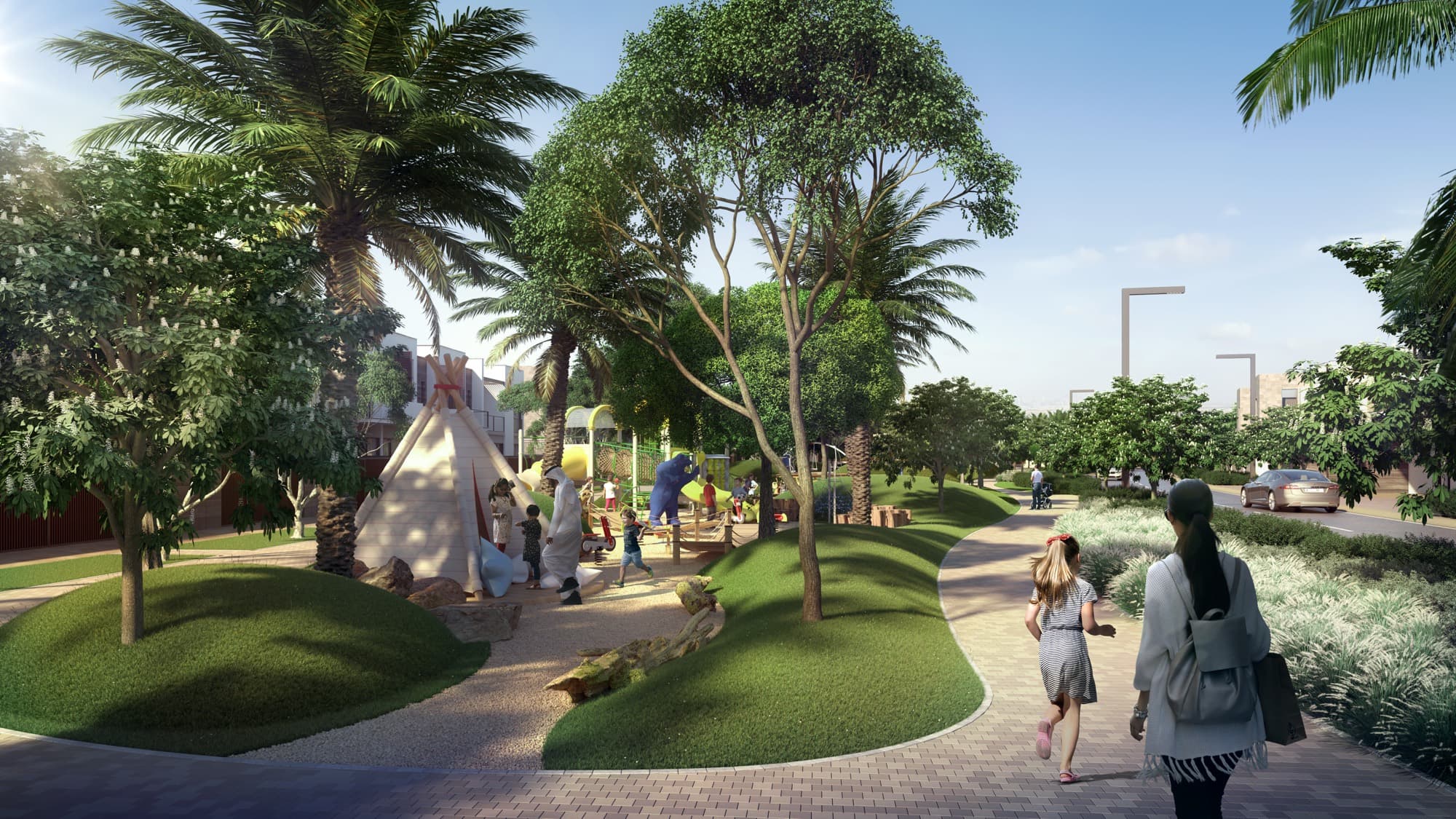
Relocating with children is a different proposition from arriving solo. School places, term timing, healthcare cover, the right home in the right community — these all have to line up, and they don't always do so neatly. The good news is that Dubai is genuinely set up for family relocation, and a master-planned community like AR3, with its central park, lazy river, pools and walkable streets, is about as gentle a landing as you'll find for kids.
Below I've laid out the things families actually ask me about: the visa and residency basics, whether to rent first or buy, how schooling really works, what it costs to live here, the unglamorous but essential business of setting up DEWA and internet, healthcare and insurance, the climate, and a realistic plan for your first ninety days. Treat the figures and rules as general guidance and verify the current detail before you act — regulations and pricing move, and your circumstances are your own.
Visas & residency: how families get the right to stay
The first thing to understand is that almost everyone living in Dubai is here on a residence visa tied either to employment or to property ownership or investment. For most relocating families, one parent's employment visa is the anchor: once that working parent has their Emirates ID and residence visa, they sponsor the spouse and children as dependants. It's a well-worn process and your employer's PRO (public relations officer) usually handles much of the paperwork.
If you're buying rather than being posted here by an employer, property ownership opens its own route. A qualifying property purchase can underpin a renewable investor visa, and at the higher end the UAE Golden Visa grants ten-year residency for property investments from AED 2,000,000 — a threshold that comfortably brings a great many AR3 homes into scope. The Golden Visa is attractive for families because it decouples your residency from a single job and lets the main holder sponsor spouse, children and, in some cases, domestic staff.
A few family-specific points worth knowing. Dependant children are generally sponsored on the parents' visa; sons can typically be sponsored up to a certain age before needing their own status, while daughters can usually remain dependants for longer. Each resident, including children, needs an Emirates ID, and a medical fitness test forms part of the adult application. None of this is onerous, but it does take time, so build it into your plan.
Rent first or buy? An honest take
This is the question I'm asked more than any other, and my honest answer is that it depends on how settled your move is. If your relocation is employer-led and there's any chance the posting is short or uncertain, renting first is the sensible, low-regret choice. It lets you live in the community, walk the streets at school run time, test the commute and feel whether AR3 suits you before you commit serious capital.
That said, plenty of families buy from the outset, and there are good reasons to. Buying can underpin your residency, it removes annual rent increases from the equation, and in a community you intend to stay in for years the maths often favours ownership. Dubai is a freehold zone in AR3, meaning all nationalities can own outright, and the buying process is fast and well-regulated through the Dubai Land Department.
If you do buy, plan for the standard costs around a purchase: the DLD transfer fee is 4% of the price, plus agency and registration fees, and if you're financing, expats can typically borrow up to around 80% loan-to-value below AED 5 million and roughly 75% above that, with some off-plan purchases sitting lower. These are general ranges — your bank and your residency status will determine the actual figures, so get a mortgage in principle early. For live, cluster-by-cluster pricing in AR3, lean on our individual cluster pages, which draw on Dubai Land Department data rather than headline estimates. My usual counsel to families: rent for your first six to twelve months if you possibly can, learn the community, then buy with conviction.
Schools & timing: the part that drives the whole move
For most families the school place is the immovable object around which everything else is arranged, so start here and start early. Dubai's private schools follow a range of curricula — the British and IB systems dominate the area around AR3 — and the popular schools fill up, so the order of operations is often: secure the school place, then choose the home within a sensible drive of it.
Schools commonly cited by AR3 families include Ranches Primary School and Jumeirah English Speaking School (JESS) in the original Arabian Ranches, both close by; Fairgreen International School in The Sustainable City; GEMS schools and GEMS Winchester on Al Ain Road; and Kent College Dubai, Repton, South View School and others within a reasonable drive. We have a dedicated schools guide that goes deeper, but the headline is that you are spoilt for choice for British and IB provision within fifteen to twenty-five minutes.
Two practical timing notes. First, the Dubai school year runs roughly from late August/early September to early July, mirroring the UK calendar, which makes a summer move convenient — though mid-year entry is possible and schools handle it routinely. Second, always verify a school's current KHDA rating yourself; ratings change year to year and the regulator publishes them. Book assessment visits before you arrive if you can; a confirmed place removes a huge amount of stress from the rest of the relocation.
Choosing the home around the school
Once a place is secured, sense-check the school run. AR3's location off Sheikh Zayed Bin Hamdan Al Nahyan Street puts several schools within a short drive, and access is now direct via both Emirates Road (E311) and Al Ain Road (E66) with the dedicated E311 exit open, which keeps these journeys brisk. Still, do a real drive at school-run o'clock rather than trusting an off-peak map estimate.
Cost of living: what a family actually spends
Dubai has no personal income tax, which is the headline that draws many families, but the cost of a family lifestyle here is real and worth budgeting honestly. The biggest line items are typically housing and school fees, with private schooling in particular being a substantial annual commitment per child — get current fee schedules directly from your shortlisted schools, as they vary widely by curriculum and year group.
Day-to-day, groceries and dining cover a broad spectrum: you can shop economically at the big supermarkets or spend freely at speciality stores and restaurants, much as you would anywhere. Utilities through DEWA, district cooling for villas with chilled-water systems, internet and mobile, car costs (most families run two cars here), and community service charges all add up. For AR3 specifically we keep a separate service-charges guide so you can model that line accurately for your chosen cluster.
My practical advice is to build a realistic monthly budget before you move, including the one-off setup costs — security deposits, agency fees, a car, furniture, school registration — that hit in the first couple of months. Families who plan for that front-loaded spend settle far more comfortably than those caught out by it.
Setting up home: DEWA, cooling & internet
The unglamorous admin is genuinely straightforward here, which surprises a lot of new arrivals. Electricity and water come from DEWA (Dubai Electricity and Water Authority). You'll set up an account in your name once your tenancy contract (Ejari) or title deed is in place, pay a refundable deposit, and you can manage everything — billing, top-ups, move-in requests — through the DEWA app. Connection is usually quick.
Many villas and townhouses use district cooling for air conditioning, billed separately from DEWA by the cooling provider, so factor that in and ask the agent which system your specific home uses. It's a meaningful cost in the hot months and catches people out if they assume it's bundled with electricity.
For internet and TV, the two main providers are du and etisalat by e&, and most AR3 homes can get fast fibre packages bundling broadband, landline and TV. Book the installation as soon as your move-in date is confirmed, because slots can be a few days out. A SIM card for each adult is easy to arrange on arrival at the airport or any provider shop with your passport, and you can later link it to your Emirates ID.
Healthcare & insurance
Dubai mandates health insurance for all residents, and for sponsored family members the sponsor is responsible for providing cover. If you're relocating through an employer, check carefully whether your package covers spouse and children or only the employee — family cover is a key negotiating point and not always included by default.
The standard of private healthcare here is high, with a dense network of clinics and hospitals. Families typically register with a GP or clinic close to home for everyday needs and have access to excellent hospital care for anything more serious. We maintain a separate healthcare guide covering the facilities nearest to AR3, which is worth reading once you've narrowed down where you'll live.
Two tips from experience: choose an insurance plan with a network and an annual limit that genuinely suit a family — maternity, dental and optical cover vary a lot between plans — and bring your children's vaccination records and any ongoing prescriptions with you, as you'll need them for school registration and for continuity of care.
Climate, seasonality & community life
Be realistic about the weather, because it shapes the rhythm of family life. From roughly November to April the climate is glorious — warm, dry days made for the park, the pools and the beach, and this is when outdoor life in AR3 is at its best. The summer, from around June to September, is genuinely hot and humid, and daytime life moves indoors to air-conditioned malls, soft-play and the like. It's very liveable, but it's a real adjustment for northern-European families in that first July.
This seasonality is exactly why a community like AR3 works so well for families. The central park, lazy river, swimming pools, padel and tennis courts, cycling and jogging tracks, and children's play areas mean there's plenty to do close to home in the good months, and the indoor options across the city carry you through the hot ones. The community is walkable, safe and quiet, with a real spine of neighbourly family life — something I value enormously as a resident.
Socially, Dubai is one of the easiest places in the world to land as a newcomer. It's a city of relocated families, so the school gate, the community pool and the local sports clubs are full of people who arrived recently themselves and remember what it's like. My honest experience is that families find their feet here faster than they expect.
Your first 90 days: a realistic checklist
Relocation feels overwhelming until you break it into a sequence. Here's the rough order I steer families through, spread across the first three months. Treat it as a guide and adapt it to your own timeline and visa route.
- Before you fly: secure school place(s), get a mortgage in principle if buying, sort shipping/storage, and gather documents (passports, birth/marriage certificates — attested where required — vaccination and medical records, school reports).
- Week 1–2: arrive, sort SIM cards, open a bank account once you have the paperwork, and start the residence-visa and Emirates ID process (medical test for adults).
- Week 2–4: finalise housing — sign the tenancy (Ejari) or complete the purchase — and confirm your move-in date.
- Week 3–5: set up DEWA, arrange district cooling if applicable, and book internet/TV installation with du or etisalat by e&.
- Week 4–6: complete health insurance for all family members and register with a local clinic/GP; transfer or buy cars and sort UAE driving licences.
- Week 6–8: settle the children into school, learn the school run at peak time, and get into the community — pools, park, clubs and neighbours.
- Month 2–3: review your budget against reality, decide on rent-vs-buy if you rented first, and tackle the smaller admin (utilities autopay, salik toll tag, schooling extras).
Frequently Asked Questions
Moving to Dubai (Families) — FAQs
Is Arabian Ranches 3 a good place to move to with young children?+
Yes — it's one of the gentler landings for relocating families. AR3 is a master-planned Emaar community with a central park, lazy river, swimming pools, play areas, padel and tennis courts and walkable, quiet streets. It's safe, family-oriented and close to several well-regarded British and IB schools, which makes the day-to-day of family life easy from the start.
Do I need a job to move to Dubai with my family?+
Not necessarily. Many families relocate on one parent's employment visa, who then sponsors the spouse and children as dependants. But you can also gain residency through property — a qualifying purchase can underpin an investor visa, and a property investment from AED 2,000,000 can secure a ten-year Golden Visa, which lets the holder sponsor their family without being tied to a single employer.
Should we rent first or buy when we move to AR3?+
If your move is at all uncertain or employer-led, rent first — it lets you live in the community, test the school run and the commute, and commit later with confidence. If you're settled on staying and want to anchor your residency or stop paying rising rents, buying can make strong sense. AR3 is freehold, so all nationalities can own outright. My usual advice: rent six to twelve months, then buy with conviction.
When does the Dubai school year start, and is it best to move in summer?+
The school year runs roughly from late August or early September to early July, mirroring the UK calendar, so a summer move lines up neatly with a fresh school year. That said, mid-year entry is common and schools handle it routinely. The key is to secure the place early, as popular schools fill up — then arrange your home and move date around it.
How much does it cost to live in Dubai as a family?+
There's no personal income tax, but a family lifestyle still carries real costs — chiefly housing, private school fees, utilities, district cooling, cars and community service charges. Schooling in particular is a significant annual commitment per child. Build a realistic monthly budget plus one-off setup costs (deposits, agency fees, a car, furniture) and verify current school fees and AR3 service charges directly before you commit.
Is health insurance mandatory, and will my employer cover my family?+
Health insurance is mandatory for all Dubai residents, and the sponsor is responsible for dependants' cover. If you're moving via an employer, check whether the package covers your spouse and children or only you — family cover isn't always included and is worth negotiating. Choose a plan whose network, annual limit and maternity/dental/optical benefits genuinely suit a family.
How do I set up electricity, water and internet in AR3?+
Electricity and water come from DEWA; you open an account in your name once your Ejari tenancy or title deed is in place, pay a refundable deposit, and manage it via the DEWA app. Many homes use district cooling for air conditioning, billed separately, so confirm which system your home uses. For internet, du and etisalat by e& both offer fast fibre packages — book installation as soon as your move-in date is set.
How far is AR3 from schools, malls and the airport?+
AR3 sits off Sheikh Zayed Bin Hamdan Al Nahyan Street in Dubailand. Silicon Central Mall is the closest mall, with Global Village around 5 minutes, Downtown Dubai about 20, and DXB International Airport roughly 20 minutes. Several schools are within a 15–25 minute drive. Access is now direct via both Emirates Road (E311) and Al Ain Road (E66), with the dedicated E311 exit open, which keeps these journeys brisk.